TIANJIN CITY, CHINA, January 27, 2026 /EINPresswire.com/ — The gear manufacturing sector is witnessing a significant transformation as Tianjin OuNaiDa Transmissions Technology Co., Ltd. introduces advanced production technologies that are reshaping industry standards. The company’s latest innovations in precision manufacturing and automated production systems have resulted in measurable improvements across key performance metrics.
1. Advanced Manufacturing Technology Drives Performance Gains
The company has implemented a new integrated manufacturing system that combines computer numerical control (CNC) machining with real-time quality monitoring. This system has reduced production cycle times by 35% while improving dimensional accuracy to within 0.005mm tolerance levels. The technology applies to the company’s full product range, including Gear Rack and Sprocket components used across multiple industrial applications.
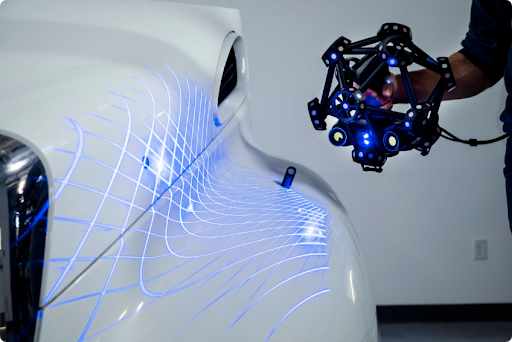
The manufacturing process now incorporates automated inspection stations that check every unit during production. This continuous monitoring system has reduced defect rates from 2.3% to 0.4% over the past 18 months. The quality control system uses laser measurement technology to verify tooth profiles, pitch accuracy, and surface finish on every component before it leaves the production line.
Production capacity has increased by 40% following the installation of new machining centers that operate with minimal human intervention. The facilities now run 22 hours per day with automated material handling systems that move components between workstations. This efficiency gain has allowed the company to meet growing demand without expanding its physical footprint.
2. Precision Engineering Delivers Measurable Results
The new manufacturing capabilities have produced quantifiable improvements in product performance. Load-bearing capacity has increased by 28% through refined heat treatment processes that achieve uniform hardness throughout each component. Service life testing shows components now operate for an average of 15,000 hours before requiring replacement, compared to 11,000 hours for previous generation products.
Noise reduction represents another concrete achievement. Sound level measurements show a decrease from 68 decibels to 54 decibels during operation under standard load conditions. This 14-decibel reduction results from improved tooth profile accuracy and surface finishing techniques that minimize vibration during engagement.
The company has also reduced material waste by 23% through optimized cutting paths and improved tool life management. Raw material utilization now reaches 87%, up from 71% three years ago. This efficiency translates directly into cost savings that the company has partially passed on to customers through more competitive pricing.
3. Industry Applications Expand
Automotive manufacturers have been among the first to adopt the improved components. Three major vehicle assembly plants in China have integrated the new products into transmission systems for electric vehicle models. The components’ reduced noise characteristics align with the quieter operation requirements of electric drivetrains.
Industrial machinery applications have also grown substantially. The products now operate in automated warehouse systems, conveyor networks, and robotic assembly lines where reliability directly impacts production throughput. One logistics company reported a 91% reduction in unplanned maintenance events after switching to the new components.
Heavy equipment manufacturers have specified the products for construction machinery, agricultural equipment, and mining vehicles. The improved load capacity and extended service life reduce total cost of ownership in these demanding applications where component failure can result in expensive downtime.
4. Production Technology Details
The manufacturing system relies on five-axis CNC machining centers capable of completing complex geometries in single setups. This eliminates multiple positioning operations that previously introduced cumulative positioning errors. Tool life has improved by 60% through the use of ceramic cutting inserts and optimized cutting parameters determined through extensive testing.
Heat treatment processes now use computer-controlled furnaces that maintain temperature uniformity within 3 degrees Celsius across the entire heating chamber. Precise temperature control and controlled cooling rates produce consistent metallurgical properties throughout each production batch. This consistency ensures predictable performance characteristics across all units.
Surface finishing employs grinding processes with sub-micron accuracy. The grinding wheels dress automatically to maintain optimal cutting geometry, and coolant systems filter particles down to 5 microns to prevent surface contamination. These measures produce surface roughness values below 0.4 Ra, contributing to reduced friction and wear during operation.
5. Market Response and Customer Feedback
Order volumes have increased by 52% year-over-year as customers recognize the performance advantages. Repeat order rates currently stand at 78%, indicating high customer satisfaction levels. The company has secured long-term supply agreements with 23 major industrial customers across Asia, Europe, and North America.
Customer surveys conducted over the past year show satisfaction ratings averaging 4.6 out of 5.0. The highest-rated attributes include product reliability, dimensional consistency, and technical support responsiveness. Some customers have reported total cost reductions of 15-20% when factoring in extended service life and reduced maintenance requirements.
International certification bodies have verified the manufacturing processes and product quality. The company holds ISO 9001 quality management certification and ISO 14001 environmental management certification. Products meet or exceed relevant industry standards including AGMA, DIN, and JIS specifications.
6. Investment in Research and Development
The company allocates 8% of annual revenue to research and development activities. The R&D team includes 45 engineers specializing in materials science, mechanical design, and manufacturing processes. This team operates a testing laboratory equipped with coordinate measuring machines, metallurgical analysis equipment, and full-scale performance test rigs.
Recent development work has focused on materials that operate at higher temperatures and under more corrosive conditions. Prototype testing of new steel alloys shows promising results, with some formulations demonstrating 35% higher fatigue resistance compared to current production materials.
Digital simulation tools now model manufacturing processes before physical production begins. This reduces development time by allowing engineers to optimize parameters virtually. The company reports that new product introduction cycles have shortened from 14 months to 9 months through the use of these simulation capabilities.
7. Future Development Direction
Looking ahead, Tianjin OuNaiDa Transmissions Technology Co., Ltd. plans to expand automation further with the goal of achieving 90% automated production by 2028. The company is evaluating artificial intelligence systems that could predict maintenance needs and optimize production schedules in real time based on order patterns and equipment condition.
Additional capacity expansion is planned for the second half of 2026, with a new production hall that will house 12 additional machining centers. This expansion will increase annual production capacity from 2.8 million units to 4.2 million units. The new facility will incorporate advanced energy recovery systems designed to reduce electricity consumption per unit by 18%.
The company is also developing products specifically for renewable energy applications, including components for wind turbine gearboxes and solar tracking systems. This segment represents a growing opportunity as global renewable energy installations continue to expand.
8. Company Overview
Tianjin OuNaiDa Transmissions Technology Co., Ltd. is a specialized manufacturer of precision transmission components based in Tianjin, China. The company operates modern production facilities equipped with advanced machining and quality control systems. Its product portfolio serves automotive, industrial machinery, construction equipment, and other sectors requiring reliable power transmission solutions.
The company employs 340 people across manufacturing, engineering, quality control, and administrative functions. With annual production capacity exceeding 2.8 million units, it supplies customers in 28 countries. The company maintains technical partnerships with research institutions and industry associations to stay current with emerging technologies and market requirements.
Established quality management systems and continuous improvement processes form the foundation of the company’s operations. Regular employee training programs ensure workforce skills remain aligned with evolving manufacturing technologies and customer expectations.
Address: No. 10 Tengwang Road, Beichen District, Tianjin 300401
Official Website: www.tjondgear.com
Ice Liu
Tianjin OuNaiDa Transmissions Technology Co., Ltd.
sales@tjond.com
Visit us on social media:
YouTube
Legal Disclaimer:
EIN Presswire provides this news content “as is” without warranty of any kind. We do not accept any responsibility or liability
for the accuracy, content, images, videos, licenses, completeness, legality, or reliability of the information contained in this
article. If you have any complaints or copyright issues related to this article, kindly contact the author above.