HARRISON, TN – January 13, 2026 – PRESSADVANTAGE –
Bark Busters Tree Service has formalized a storm response protocol intended to strengthen safety coordination, dispatch triage, and documentation following severe weather events in Hamilton County and nearby communities in southeast Tennessee and adjacent north Georgia. The protocol applies to emergency tree removal, hazard reduction, access restoration, and post storm site stabilization, reflecting operating practices the company has used during periods of high demand.
Storm events in the region can create overlapping hazards, including trees resting on structures, broken limbs suspended in canopies, uprooted trees affecting driveways, and debris that blocks roadways or limits emergency access. Bark Busters Tree Service stated that these conditions can change rapidly after storms, as saturated soil, wind exposure, and compromised root systems alter tree stability in the hours that follow. The protocol establishes a structured workflow for evaluating risk, selecting removal methods, and documenting work in a consistent sequence.
Jimmy Moore, owner of Bark Busters Tree Service, said the framework is designed to support consistent decision-making when multiple sites require attention at the same time. “When storms hit, property owners need clarity about next steps, and crews need a shared safety plan. A defined protocol helps prevent confusion and supports careful work even when conditions are stressful,” Moore said.
The protocol begins with intake and triage. Calls are prioritized using risk factors that include trees contacting occupied structures, trees leaning toward roofs or vehicles, blocked driveways that prevent ingress or egress, and conditions affecting public rights of way. Bark Busters Tree Service said reports involving utility corridors are handled with additional caution and may require coordination with utility providers before removal work proceeds. The company noted that dispatch prioritization can change as new information is received, including reports of movement, additional failures, or shifting hazards during ongoing weather.
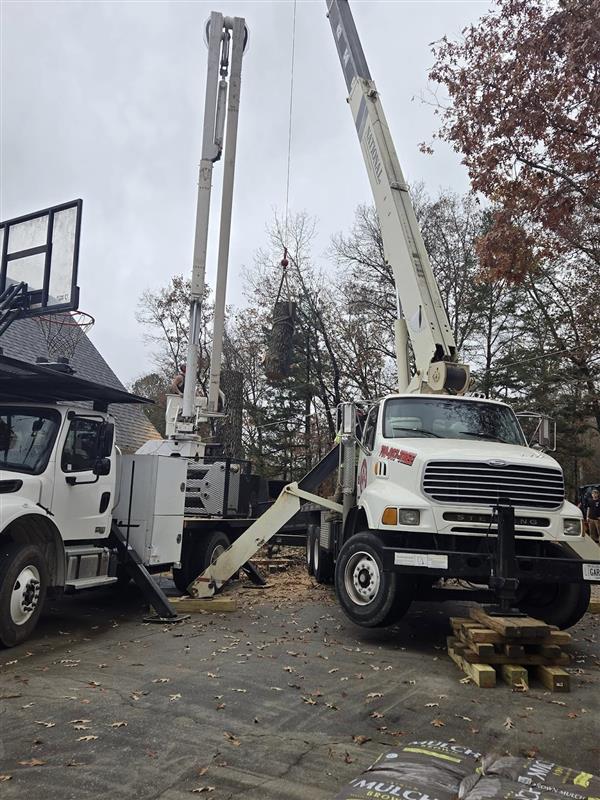
After intake, crews conduct an on-site assessment before cutting, rigging, or dismantling begins. The assessment includes identification of overhead hazards, lean direction, root plate movement, tensioned wood, and hanging limbs. Crews also evaluate access conditions such as slope, soil saturation, and proximity to fences or adjacent structures. Based on findings, the company selects methods that may include sectional dismantling, controlled lowering with rope rigging, or crane-assisted removal when site access and setup conditions allow for controlled lifting.
Bark Busters Tree Service stated that documentation is embedded into each phase of storm response work. Field staff record baseline images and notes that document tree position, points of impact, and visible damage patterns. Post-work documentation records the completed scope, debris removal status, and remaining site conditions when applicable. The company said documentation can support insurance claim files and property records by providing time-stamped evidence of conditions and work performed. The protocol also includes internal reporting that records equipment used, crew assignments, and site constraints for operational review.
Safety planning is a central component of the protocol. Bark Busters Tree Service stated that storm-damaged trees can contain stored energy in bent fibers, suspended stems, and partially failed trunks, which can create unpredictable movement during cutting. Crews establish exclusion zones, confirm escape routes, and use standardized communication practices before initiating removal. The protocol includes equipment checks for saws, rigging lines, friction devices, blocks, slings, and personal protective equipment. The company stated that crews also monitor changing ground conditions, including soft soil and shifting footing near root plates and debris piles.
Controlled removal methods are emphasized when trees are located near structures or in tight access areas. Rope rigging is used to guide sections away from roofs, windows, and landscaping features when lowering is required. When a crane is appropriate, lift planning considers section weights, pick points, swing paths, and landing zones. Bark Busters Tree Service stated that the selected method is based on conditions and risk rather than speed, and that crews avoid techniques that increase the likelihood of uncontrolled section movement.
Post removal cleanup and stabilization are treated as a defined step rather than an informal add-on. Debris is managed to restore access routes, reduce tripping hazards, and support safe reentry to affected areas. The company stated that cleanup may involve hauling, chipping, stacking, and removal of larger sections, depending on site constraints and local requirements. When soils are saturated or root plates have displaced ground, the protocol includes guidance for marking unstable areas and advising property owners of remaining hazards that may require follow-up.
Availability is maintained around the clock during storm periods, including weekends and holidays. Bark Busters Tree Service stated that staffing and scheduling are managed to allocate crews based on severity and location. The protocol includes a communication standard intended to provide property owners with estimated arrival windows, updates when dispatch priorities change, and clear descriptions of the work sequence. The company also noted that non-emergency projects may be rescheduled during storm periods to prioritize hazard conditions and access restoration.
Bark Busters Tree Service is based in Harrison, Tennessee, and provides tree removal, trimming, pruning, stump grinding, and emergency response services for residential and commercial properties. The company stated that it operates as a licensed and insured provider and follows industry safety standards, including ANSI A300 guidance for tree care work where applicable.
###
For more information about Bark Busters Tree Service, contact the company here:
Bark Busters Tree Service
Jimmy Moore
(423) 208-6643
barkbusters88@gmail.com
5899 TN-58, Harrison, TN 37341